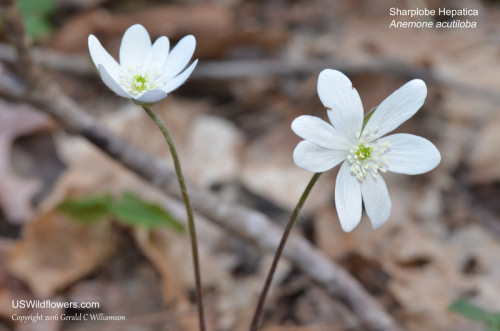
My wife and I took a short walk in the North Chickamauga Creek Pocket Wilderness (now managed by Tennessee’s Cumberland State Park; I think it is now named the North Chickamauga State Natural Area) near Soddy-Daisy today. This is a lovely walk along the North Chickamauga Creek; nothing real steep for the first half mile or so. Lots of wildflowers and a beautiful creek to boot. Here are photos of a few of the wildflowers that are blooming.
Author Archives: Gerry
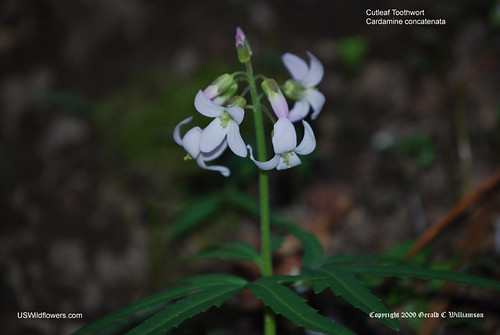
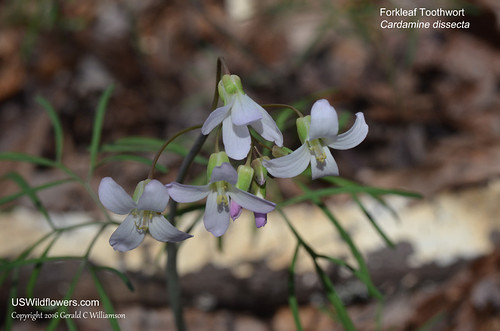
#NPOD: Cutleaf Toothwort #Nativeplants
Cutleaf Toothwort – Native Plant of the Day 03/16/2016
Photo from March 7, 2009. Location: The Pocket at Pigeon Mountain, Walker County, GA. More photos / info at the Cardamine concatenata detail page.
The Pocket at Pigeon Mountain Status Update 3/12/2016
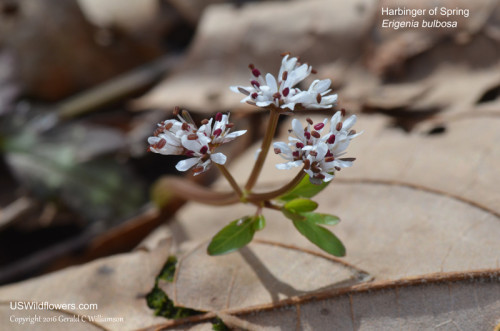
The warm weather has continued, along with a fair bit of rain. It’s been 10 days since my last trip to The Pocket (3/2), and I was expecting some significant changes in what was blooming. Some news – the Harbinger-of-Spring is almost gone. However, that’s not the only news… Wait for it…
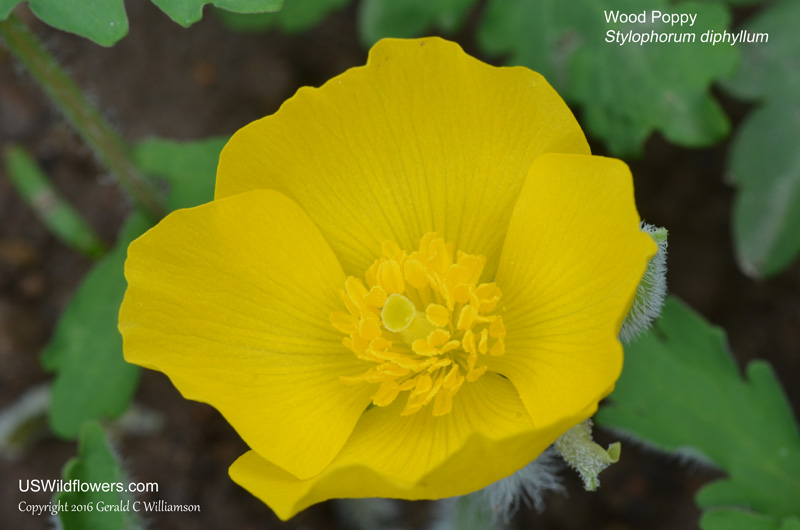
Not just the Wood Poppy…
The Pocket at Pigeon Mountain Status Update 3/2/2016
As reported a month back, Hepatica, Harbinger-of-Spring, and a Star Chickweed were blooming at The Pocket at the end of January as a result of our unusually warm winter. We had some cold weather in February, and nothing much had changed in mid-February. My wife and I were out of town for a couple of weeks, so when we returned yesterday, I was anxious to see what had developed in our absence. While the boardwalk itself doesn’t show too much action, there is a lot that is cranking up both on the trail to the bottom of the falls past the end of the boardwalk and on the Pocket Loop Trail (aka the horse trail) up to the top of the falls.
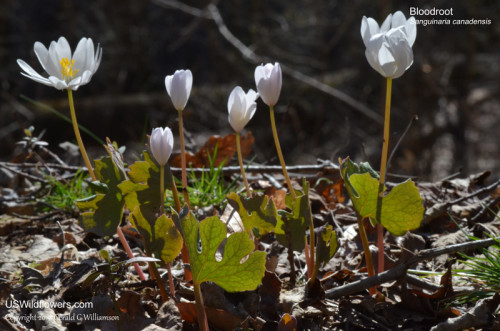
Yes, Bloodroot (Sanguinaria canadensis) is blooming along the horse trail – I haven’t see it this early in four years, implying (as expected) an early spring this year.
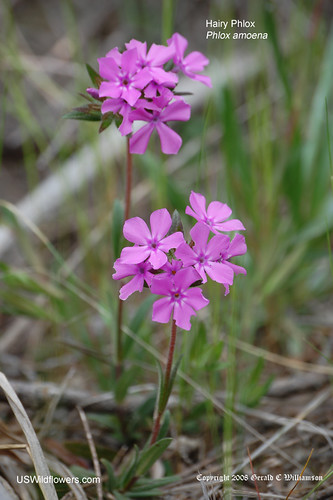
#NPOD: Hairy Phlox #Nativeplants
Hairy Phlox – Native Plant of the Day 02/27/2016
Photo from Apr 26, 2008. Location: Grundy County, TN. More info / photos at the
Phlox amoena detail page.
Round-lobed Hepatica – Anemone americana – Added to USWildflowers’ Database
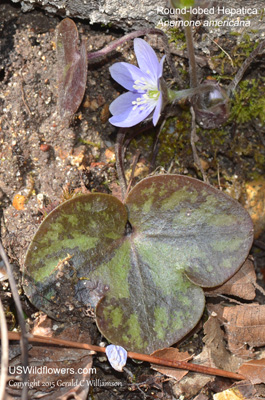
Round-lobed Hepatica, a native species, has been added to the USWildflowers database (02/17/2016.) Scientific name is Anemone americana. Photo below was taken at the Elsie Holmes Nature Park, Catoosa County, GA on March 15, 2015. Go to the Round-lobed Hepatica detail page for more information.
Early Report on The Pocket at Pigeon Mountain 02/16/2016
As reported a couple of weeks ago, we’ve had a VERY warm winter, with Hepatica and Harbinger of Spring blooming when I visited The Pocket on January 30 – the earliest I’ve ever seen native wildflowers blooming at The Pocket. We finally had some “real winter” in the weeks since then, so I wasn’t sure what to expect when I visited The Pocket today. That cold snap slowed things down, but there is some progress. If your “thing” is to see Harbinger of Spring at peak, or to see the waterfalls with a really good flow, this is a good time to visit The Pocket.
Foxglove Beardtongue – Penstemon digitalis – Added to USWildflowers’ Database
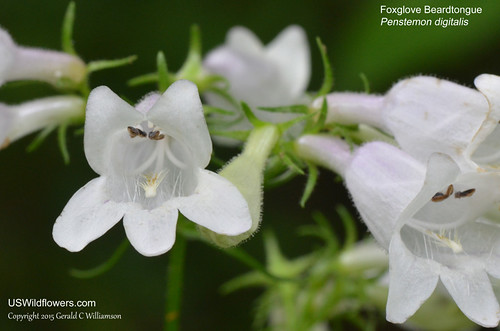
Foxglove Beardtongue, a native species, has been added to the USWildflowers database (02/13/2016.) Scientific name is Penstemon digitalis. Photo below was taken in Walker County, GA on May 21, 2015. Go to the Foxglove Beardtongue detail page for more information.
Wildflowers at The Pocket at Pigeon Mountain – In January!
Who would expect Hepatica to be blooming in January? Today my wife and I wanted to enjoy a beautiful day with some time outside, so we decided to go down to The Pocket for a walk on the boardwalk. The earliest I’ve seen Harbinger of Spring blooming down there previously was Feb 9 (back in 2009), but as warm as it’s been I wasn’t going to be surprised if we found that early bloomer with flowers. But I wasn’t expecting this:
Genus Penstemon Moved from Scrophulariaceae to Plantaginaceae
I may be a decade or two behind the times, but the Penstemon species found on USWildflowers.com have been moved from Scrophulariaceae – the Figwort family – to Plantaginaceae – the Plantain family. The change in classification was based on genetic research done in the 1990’s, and published around the turn of the century. Wide acceptance of this classification change occurred over the next decade, but many publications have continued to list the genus in Scrophulariaceae. That oversight has now been corrected on USWildflowers.com.